Washing and Storing Fresh Produce Safely
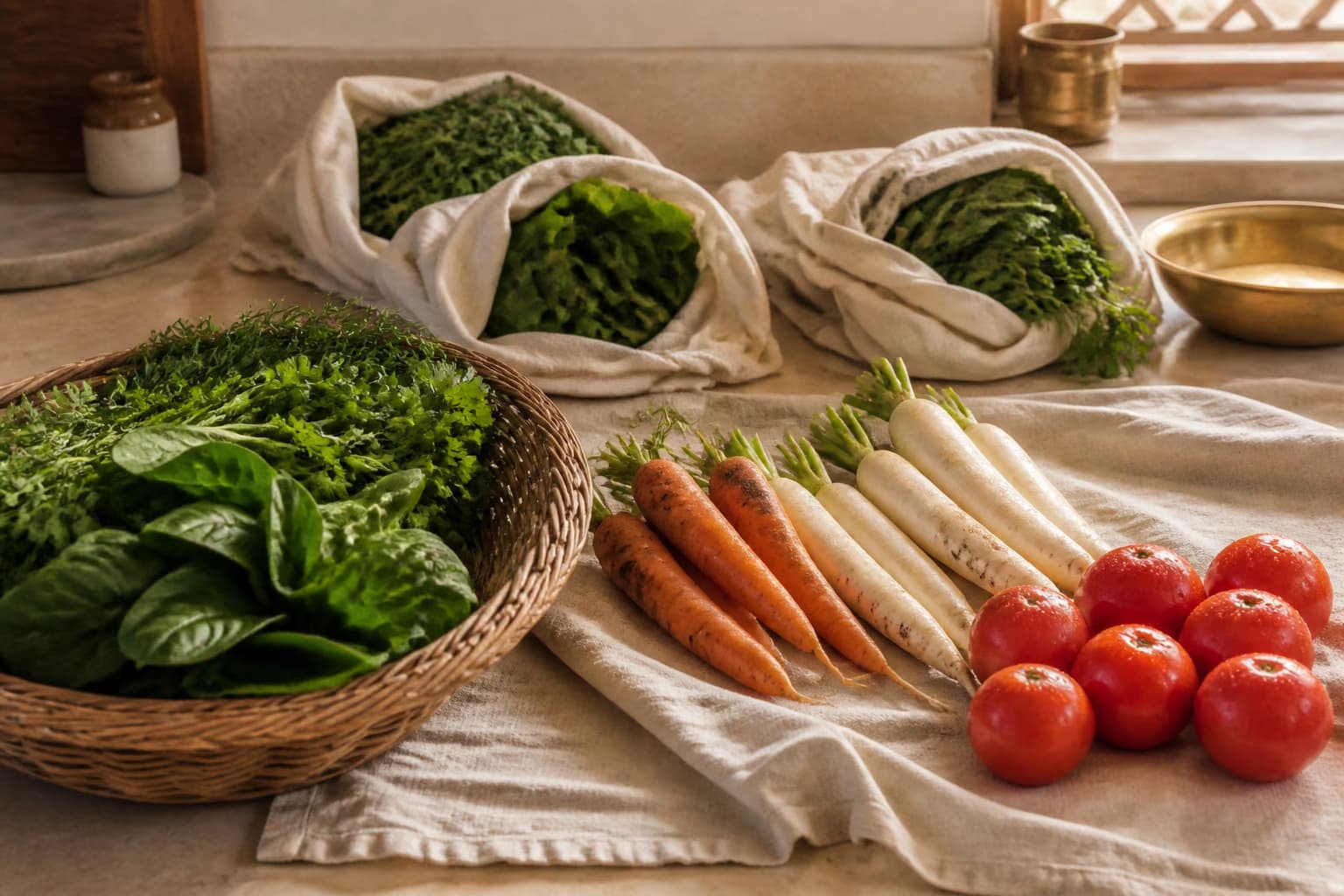
Wash fresh fruits and vegetables with clean running water, not soap or household detergent. Start with clean hands and surfaces, keep produce separate from raw meat, poultry and seafood, and store cut produce promptly under refrigeration.
Clean the kitchen first
Wash hands before and after handling food. Clean the sink, knife, board and work surface, especially if they were used for another food. Use a separate board for produce when possible.
The FSSAI safe-food guidance recommends rinsing fruits and vegetables under running tap water, including produce with rinds that are not eaten. Firm items can be rubbed under running water or cleaned with a dedicated produce brush.
Wash with water, not household cleaners
Remove damaged outer leaves and visible soil, then rinse under clean running water. Do not use dish soap, bleach or surface cleaner on food. These products are not designed for produce and can leave residues.
Wash delicate leaves in small batches and drain them well. Excess surface water can speed deterioration during storage, so use a clean salad spinner or cloth and allow the produce to dry appropriately.
Prevent cross-contamination
Keep produce away from raw meat, poultry and seafood in shopping bags, on counters and in the refrigerator. Store raw animal foods so they cannot drip onto ready-to-eat produce. Clean tools and surfaces between tasks.
Match storage to the produce
Not every vegetable belongs in the same place. FSSAI's Eat Right India handbook advises breathable storage for cleaned leafy greens and air circulation for onions, garlic and potatoes, while other items may benefit from cool or refrigerated storage. Follow the current label or supplier guidance for packaged produce.
Cut, peeled or cooked produce needs more careful time and temperature control. Refrigerate it promptly in a clean covered container and discard food that shows spoilage or has been held unsafely.
A simple home routine
- Wash hands and clean the work area.
- Remove damaged or decayed parts.
- Rinse produce under clean running water.
- Dry as appropriate for the item.
- Separate ready-to-eat produce from raw animal foods.
- Refrigerate cut produce promptly.
- Inspect stored produce and remove spoiled items.
This is general home food-safety guidance. People with specific medical risks should follow advice from their healthcare professional and current local food-safety authorities.