Crop Rotation for Small Vegetable Plots: A Simple Four-Bed Plan
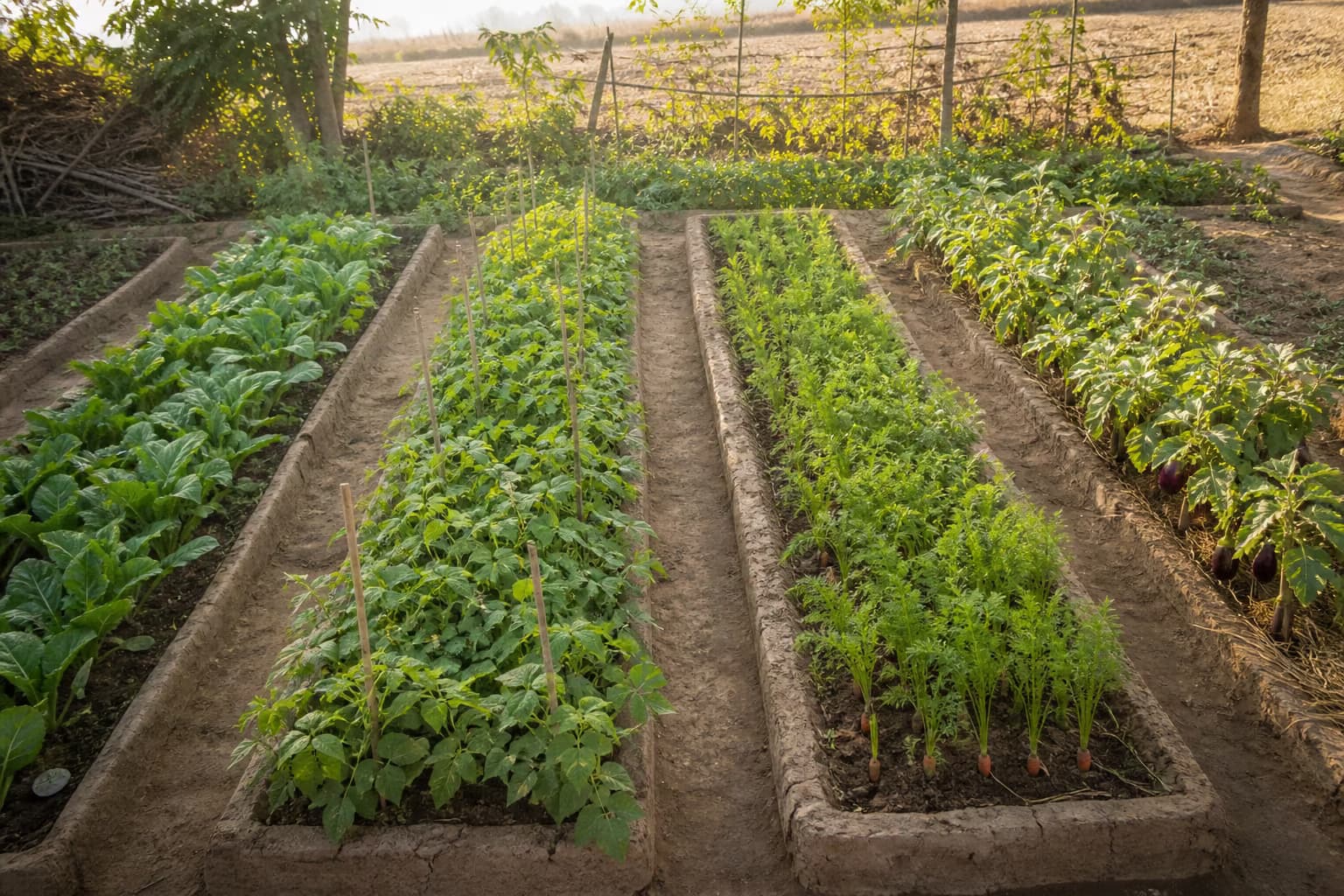
Crop rotation is the practice of not growing the same crop family in the same bed season after season. In a small garden, a four-bed plan is an easy way to begin: group crops broadly, record where they grow, and move each group to a different bed in the next suitable season.
Why rotation is useful
Different crops place different demands on a bed, explore different soil depths and face different pests and diseases. Rotation does not guarantee a pest-free garden, but it avoids repeatedly creating the same conditions in one place. The FAO home-garden guidance recommends moving crop groups and combining rotation with compost, mulch and permanent beds.
A simple four-bed pattern
You can start with four practical groups.
- Legumes such as peas or beans.
- Leaf crops such as spinach, amaranth or lettuce.
- Root and bulb crops such as carrot, radish, beetroot or onion.
- Fruiting crops such as tomato, brinjal, chilli, okra or gourds.
Next season, move each group forward by one bed. Keep perennial plants and crops that need permanent supports outside the rotation if moving them is impractical. Crop families matter more than the part we eat, so tomato, chilli and brinjal should not be treated as unrelated simply because their fruits look different.
Adapt the plan to reality
A strict diagram is less useful than an accurate record. If one bed is shaded, waterlogged or much smaller, it may not suit every group equally. If a crop fails or remains longer than expected, update the plan instead of forcing the calendar.
Rotation also works best with other habits:
- Remove badly diseased crop residues from the bed.
- Clean supports and tools when disease has been present.
- Add mature compost according to soil need.
- Keep soil covered where practical.
- Choose locally suitable crops and planting windows.
What rotation cannot do
Rotation cannot correct contaminated soil, unsuitable pH, poor drainage or a serious nutrient imbalance. It also will not stop every mobile insect or airborne disease. Those issues need their own diagnosis.
Make next season easier
Draw four boxes in a notebook and write the actual crop family in each box. Add sowing and harvest dates, disease observations and major amendments. A one-minute record at planting and harvest is enough to prevent guesswork later.
The best rotation is not the most complicated one. It is the one the grower can follow, verify and adjust after each season.