Harvesting Leafy Greens for Careful Handling
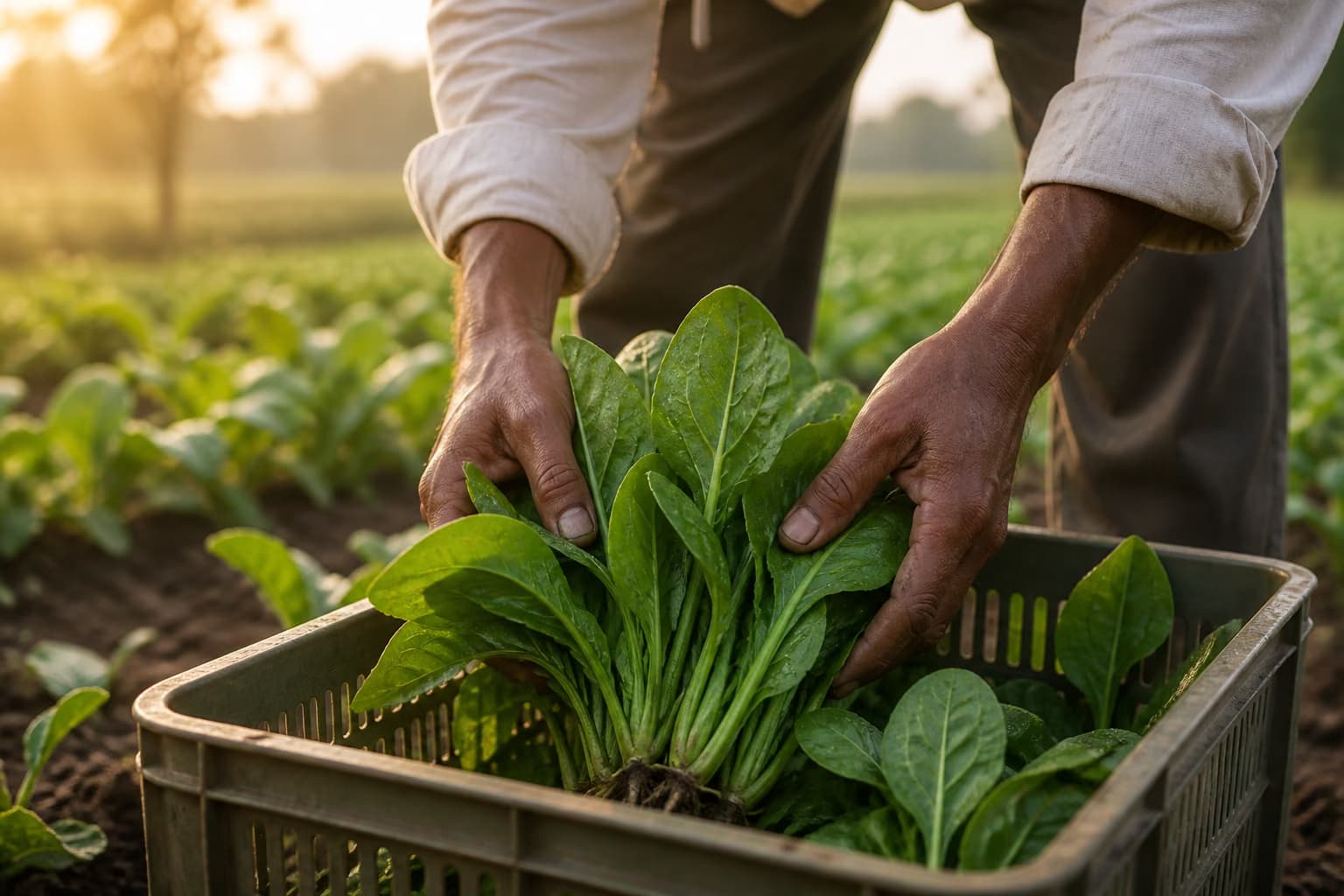
Leafy greens are delicate after harvest. The practical approach is to pick manageable quantities, use clean tools and containers, keep the leaves out of direct heat, and move them promptly into the next handling step.
Harvest only what can be handled
Large piles can crush the leaves at the bottom and remain warm for longer. Plan the batch around available shade, clean crates, washing capacity and storage. If the crop is wet from rain or irrigation, handle it gently and inspect more closely for damaged material.
For cut-and-come-again crops, take only the suitable outer leaves or cut at the recommended point for that crop. Do not assume every leafy vegetable regrows in the same way. Use variety-specific guidance and avoid damaging the growing point when repeated harvest is intended.
Use clean, suitable equipment
Clean hands, knives, shears and containers before harvesting food. A sharp tool can make a cleaner cut than tearing a tough stem. Keep harvest crates off contaminated ground and do not reuse a container that held chemicals, waste or animal products.
Shade matters immediately
Direct sun and hot surfaces can warm harvested leaves quickly. Move filled containers to a clean shaded area and avoid overpacking them. Ventilated crates can help air move around the produce, but they must still be clean and in good condition.
Sort without inventing quality
Remove leaves that are badly damaged, decayed or visibly contaminated. Natural variation in size or shape is not automatically a safety defect. Separate cosmetic grading from food-safety inspection so useful produce is not discarded for appearance alone.
The FSSAI fruits and vegetables guidance describes sorting, cleaning with potable water and separation between treated and untreated produce in commercial handling. The exact process should match the scale and applicable food-safety requirements.
A careful harvest sequence
- Prepare clean tools, cloths and containers.
- Harvest a manageable batch.
- Keep crates shaded and avoid compression.
- Remove decayed or contaminated material.
- Move promptly to the correct washing, cooling or storage step.
- Clean equipment after use.
Harvest time is only the start of produce care. Good handling protects what the field produced without claiming that appearance alone proves freshness, safety or nutrient content.