Planning a Seasonal Kitchen Garden in North India
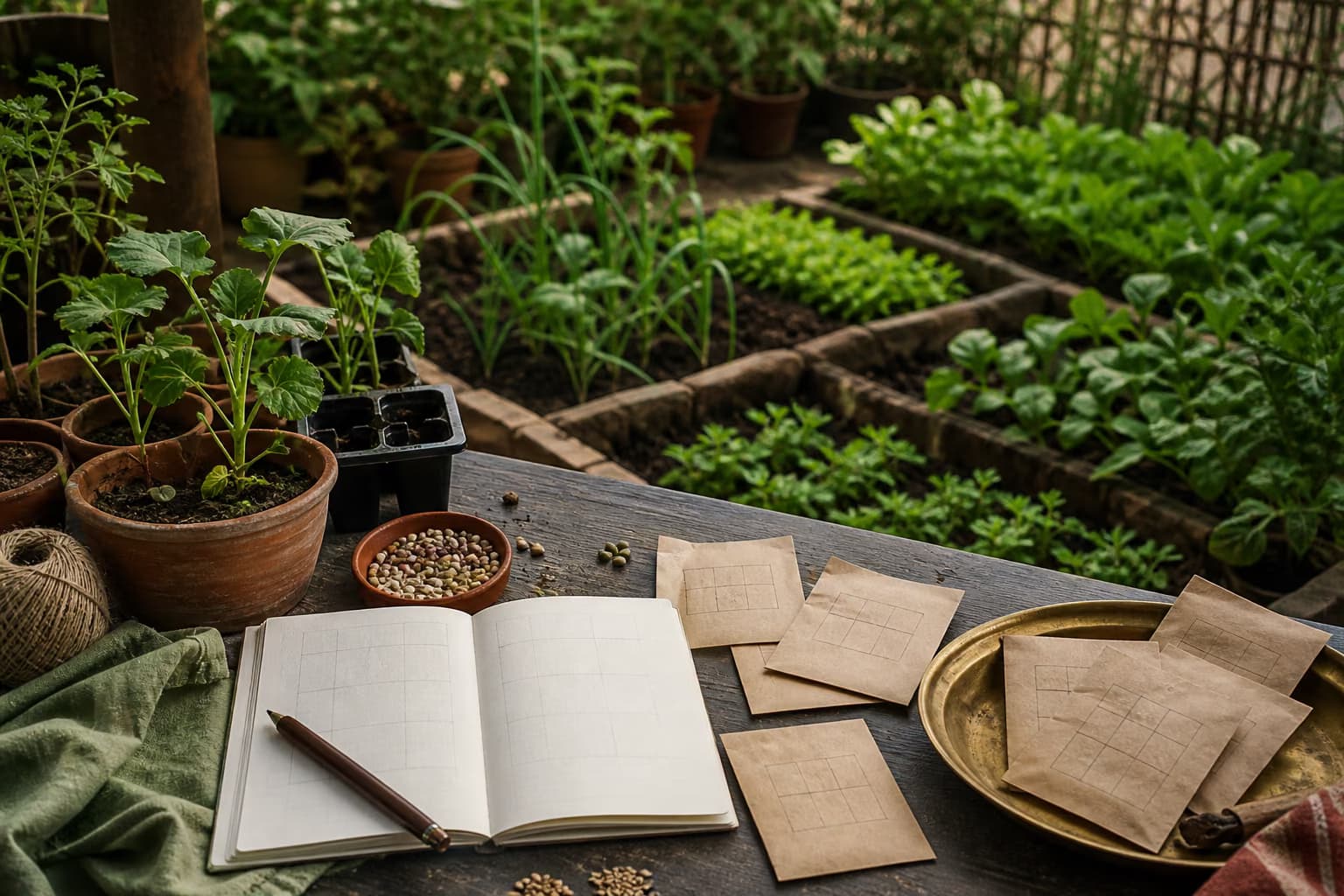
A practical North Indian kitchen garden starts with three broad growing windows—kharif, rabi and summer—but the calendar is only a guide. Choose crops after checking local temperature, rainfall, water, sunlight and the planting advice for the specific variety.
Use seasons as planning buckets
Kharif broadly follows the monsoon, rabi covers the cooler winter cycle, and summer sits between or around them depending on location. Delhi NCR can move quickly from cold spells to intense heat, so one fixed national sowing date is not reliable for every garden.
ICAR's kharif agro-advisory lists crops such as okra, chilli, brinjal, tomato and several gourds among kharif options in relevant regions. ICAR's rabi advisory includes cool-season guidance for leafy vegetables and root crops. These are reference points, not substitutes for a local forecast or variety label.
Map the space before buying seed
Record four things: hours of direct sun, reliable water access, drainage after heavy rain and the usable bed or container depth. Then decide how much time the household can realistically give to watering, tying, harvesting and pest checks.
A smaller planted area that can be observed regularly is usually more useful than many neglected crops.
Build a mixed but manageable plan
Choose a few crops from different groups.
- Quick leafy crops for repeated observation and harvesting.
- One or two root crops where soil depth and texture allow.
- Fruiting crops only where sun, support and season are suitable.
- Herbs or flowering borders that fit without crowding the bed.
Staggering a small amount of seed can spread the harvest, but only when the weather remains suitable. Keep space for paths so beds are not compacted by foot traffic.
Plan for transitions
Before one crop finishes, decide what follows it. Remove badly diseased residues, update the crop-rotation record, inspect irrigation and test soil when a nutrient or pH problem is suspected. Do not add fertiliser simply because a new season has started.
A one-page seasonal record
- Write the crop and variety.
- Record sowing or transplanting date.
- Note the bed and previous crop family.
- Add major weather events and irrigation changes.
- Record first and final harvest.
- Note disease, pest or drainage problems.
Seasonal planning is not prediction. It is a disciplined way to make a reasonable choice, observe what actually happened and improve the next cycle.