Pollinator-Friendly Vegetable Gardens: Small Changes That Help
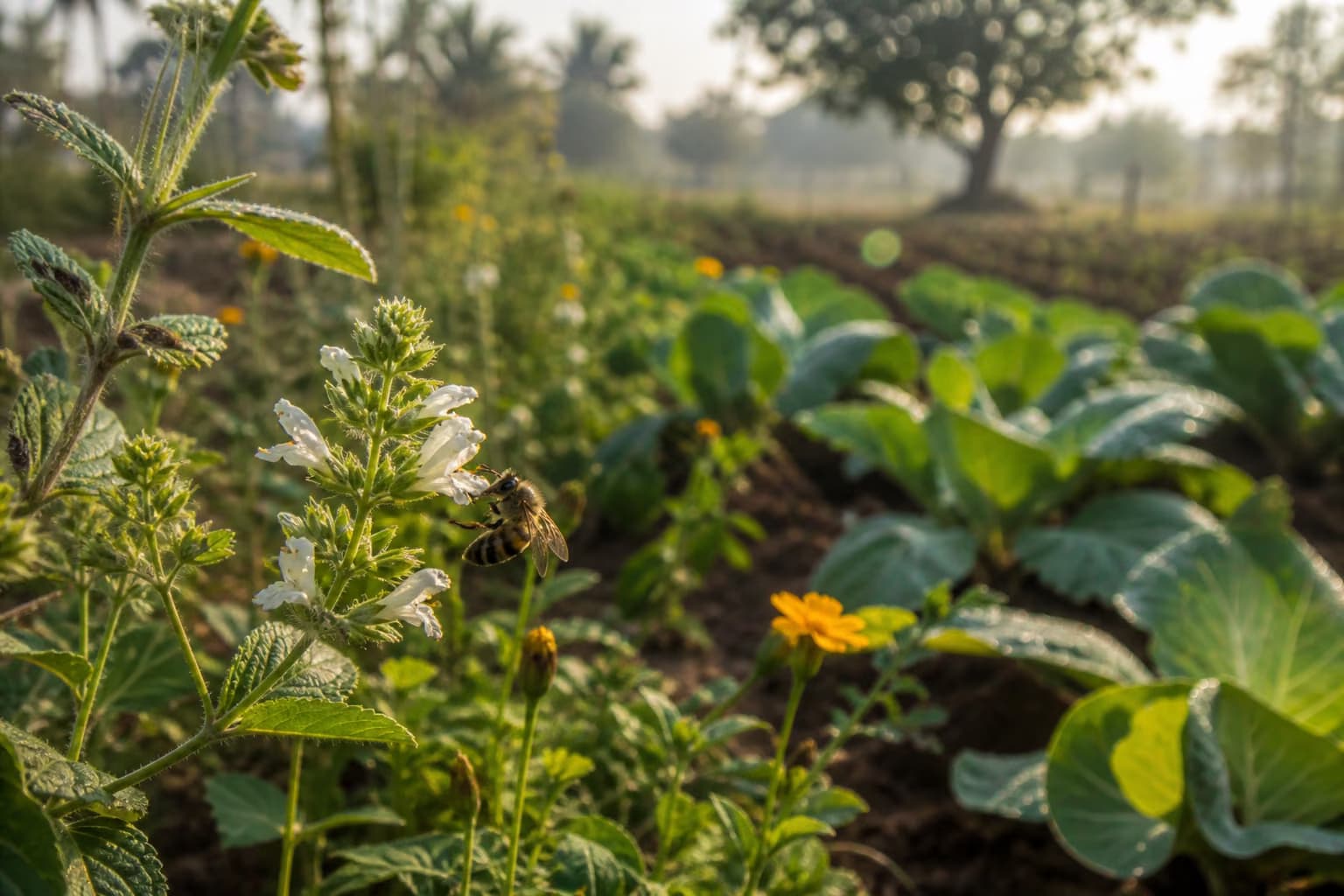
A pollinator-friendly vegetable garden provides food, shelter and safer movement through the growing season. The practical starting point is diversity: keep suitable flowering plants available at different times, protect small habitat areas and avoid unnecessary pesticide exposure.
Why pollinators matter
Pollination moves pollen between flower parts so many plants can form seed or fruit. Not every crop depends on animal pollination in the same way, but many flowering crops benefit from insects and other pollinators. The FAO Global Action on Pollination Services explains the link between wild ecosystems, agricultural production and pollinator habitat.
Offer a sequence of flowers
One short burst of flowers is less useful than a sequence across the season. Choose locally suitable species with different flowering windows and simple, accessible blooms. Allow selected herbs or border plants to flower where this does not create a weed or disease problem.
The aim is not to turn every vegetable bed into an ornamental garden. A narrow flowering edge, a few container plants or a managed strip near the plot can add forage without crowding crops.
Keep some habitat, but manage it
The FAO pollinator-management guidance highlights flower-rich margins, buffer areas and hedgerows as useful habitat features. In a small garden, the equivalent may be a quiet patch of bare ground, hollow stems, a small shrub edge or leaf litter left where it will not create a safety or pest issue.
Avoid disturbing every corner at the same time. At the same time, do not allow habitat features to block access, harbour standing water or compromise food hygiene.
Reduce pesticide risk
Correct identification comes first. An insect on a leaf is not automatically a pest, and visible damage does not identify the cause. Use physical, cultural or targeted controls where suitable, and follow the current label and local expert advice for any crop-protection product. Avoid spraying open flowers or active pollinators.
Observe before judging success
- Walk the garden at the same time each week.
- Note which flowers are open.
- Record visiting insects without trying to handle them.
- Compare fruit set and plant health across the season.
- Adjust flowering gaps and risky practices the following season.
A single bee sighting does not prove a complete pollination system, and the absence of insects during one visit does not prove failure. The goal is a garden that consistently offers diverse forage and safer habitat while remaining practical to grow and harvest.