How to Read Healthy Garden Soil Before You Plant
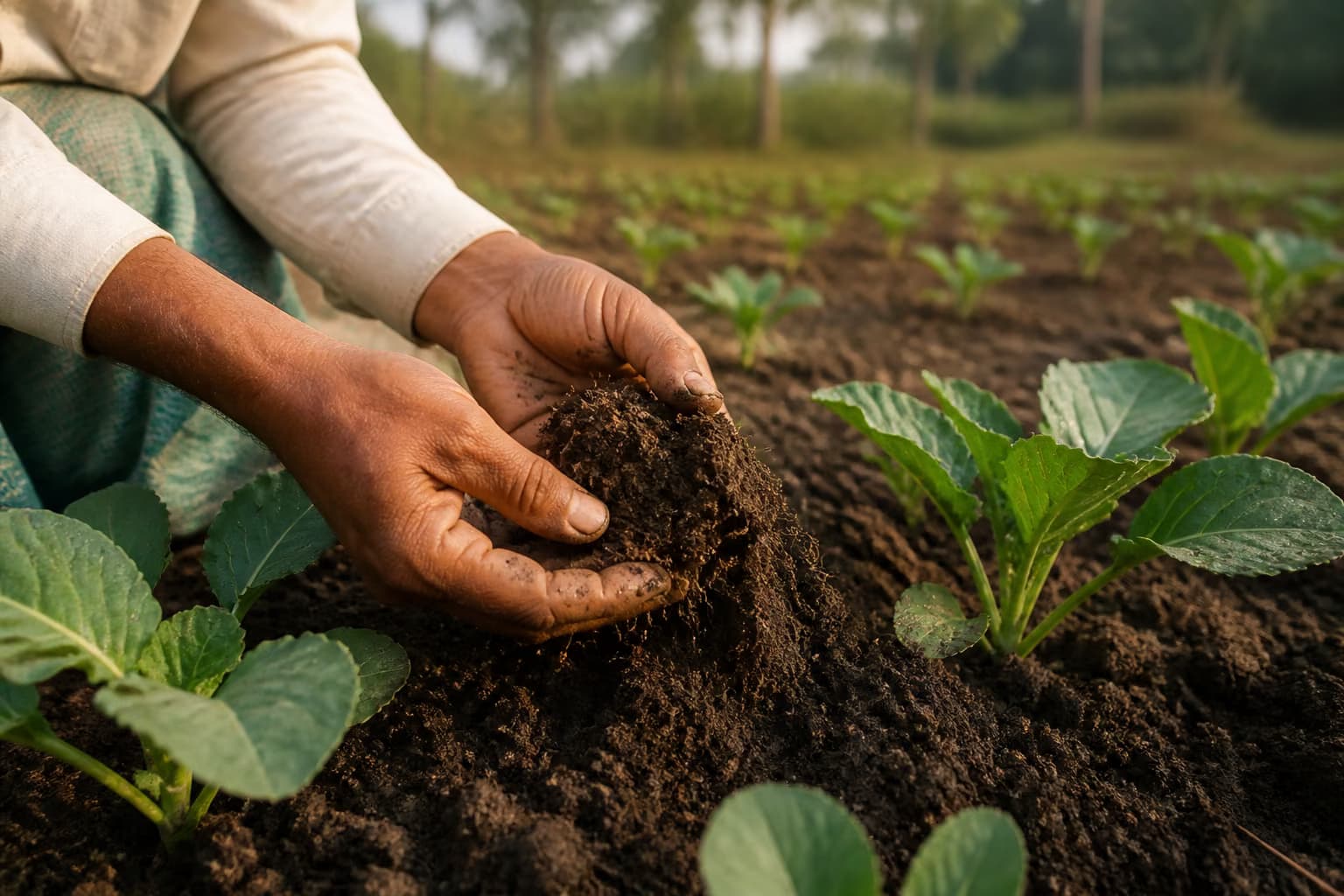
Healthy soil is not identified by colour alone. Before planting, check how the soil feels, how quickly water moves through it, whether roots can enter it, and whether a simple soil test shows a nutrient or pH problem.
Start with structure, not appearance
Take a small handful of moist soil and press it gently. Soil that forms a hard, polished lump may be compacted or clay-heavy. Soil that will not hold together at all may drain very quickly. For many vegetable beds, the practical goal is a crumbly structure that holds some moisture while still leaving air spaces for roots.
Do not assume that dark soil is automatically fertile. Colour can come from organic matter, minerals or moisture. A laboratory or reliable local soil test is the safer way to decide whether any amendment is needed.
Watch what water does
After ordinary watering, observe the bed instead of reaching for a fixed schedule.
- Water standing for a long time can signal poor drainage or compaction.
- Water disappearing immediately while the root zone stays dry can signal very fast drainage.
- A crusted surface can make it harder for small seedlings to emerge.
- Runoff from the bed means water is leaving before the soil can use it.
The FAO home-garden soil guide describes soil and plants as one connected system and recommends rebuilding organic matter, using crop rotation and matching amendments to local soil conditions.
Look for roots and biological activity
Healthy roots are a useful field clue. They should be able to spread through the bed rather than turn sharply along a hard layer. Earthworms and decomposing plant material can indicate active soil life, but their absence on one hot or dry day does not prove the soil is unhealthy.
Improve slowly and measure the response
If the bed needs help, start with mature compost, surface cover and less unnecessary traffic. Avoid adding large amounts of any manure or fertiliser without knowing its maturity, strength and the soil's existing condition. More is not automatically better.
Keep a short record of what was planted, how irrigation behaved and where growth was uneven. That record makes the next soil test and the next planting decision more useful.
A simple pre-plant check
- Moisten and feel soil from several points in the bed.
- Check for a hard layer below the surface.
- Observe drainage after normal watering.
- Review the previous crop and any amendments already applied.
- Test the soil before correcting a suspected nutrient or pH issue.
Soil health is a direction, not a single score. Careful observation, measured amendments and season-to-season records are more reliable than judging a bed from one photograph or one handful.