How to Water a Vegetable Garden Without Wasting Water
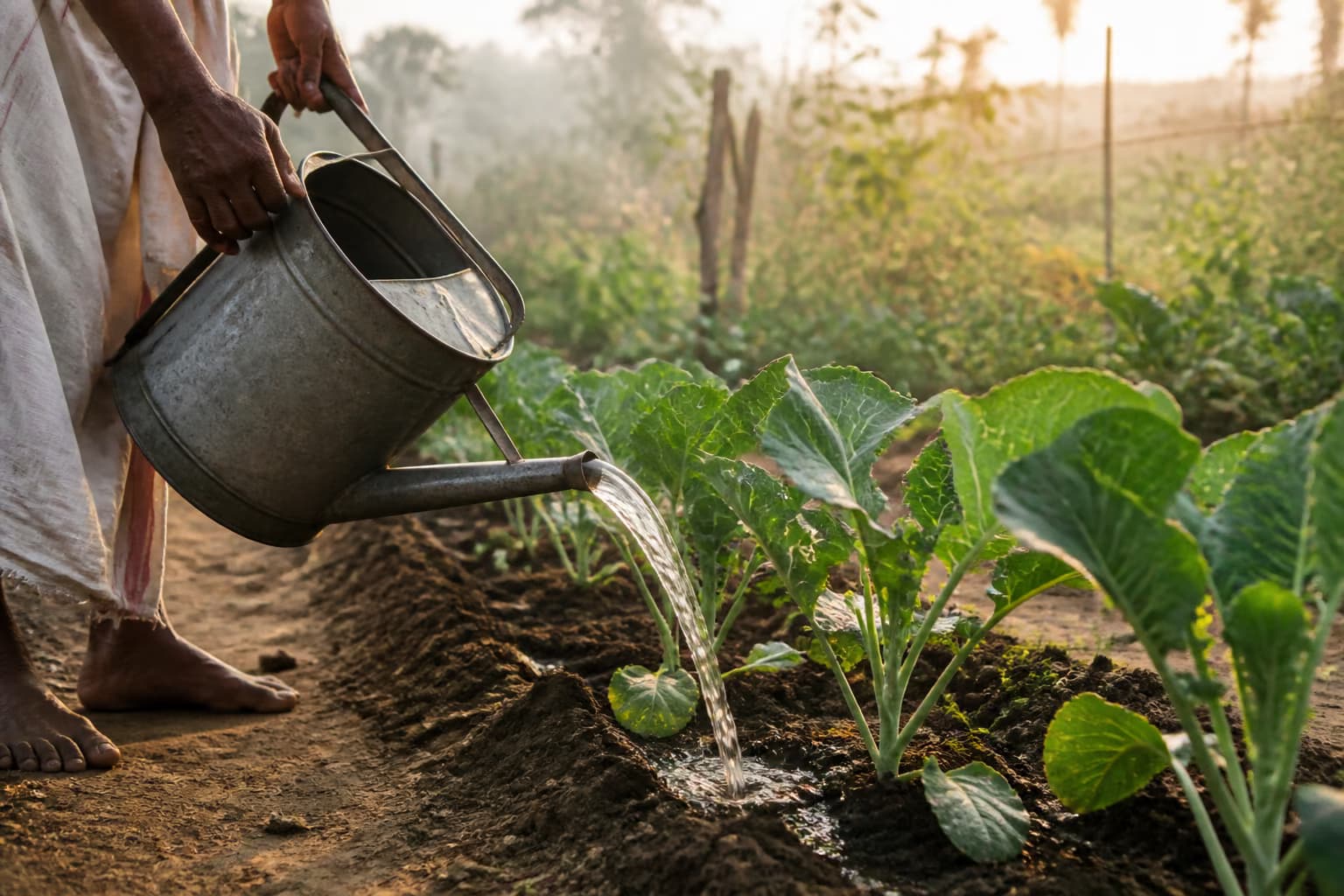
The simplest water-wise rule is to water the root zone slowly and then check the soil before watering again. A fixed daily routine can overwater one bed and leave another dry because soil, weather, crop stage and drainage all change the result.
Check before you water
Push a finger or small trowel into the soil away from the stem. The dry-looking surface may hide moisture below, while a crust can hide a dry root zone. Check more than one point in a large bed. Wilting at midday is also not always proof of dry soil; some plants temporarily lose water faster than their roots can replace it during intense heat.
Put water where roots can use it
Apply water close to the soil rather than spraying it high into the air. A gentle flow gives water time to enter the bed and reduces runoff. Watering the base also avoids making leaf wetness the goal.
The FAO home-garden summary connects water management with soil cover, organic matter, drainage and crop choice. Those practices work together: a compacted or bare bed can lose water even when the total amount applied seems generous.
Let weather change the plan
- Hot, windy days can dry beds faster.
- Cloudy conditions can slow water use.
- Newly transplanted seedlings have smaller root systems and need closer observation.
- Deep-rooted established plants may use moisture below the surface.
- Heavy rain does not help if it runs off or leaves the bed waterlogged.
Early morning is often a practical time because the grower can inspect the bed, correct leaks and avoid watering in peak heat. The correct frequency, however, still comes from the crop and soil, not the clock alone.
Reduce avoidable losses
- Repair leaking cans, hoses or lines.
- Shape beds so water enters the root zone rather than the path.
- Use a suitable mulch where it will not create a wet-stem or pest problem.
- Remove weeds that compete with young crops.
- Group plants with broadly similar water needs when planning a bed.
Signs to investigate
Yellowing, slow growth or leaf damage can have many causes. Do not respond to every symptom by adding more water. Check soil moisture, roots, drainage and recent weather first. Persistent problems deserve local agronomic advice.
Good watering is a feedback loop: observe, apply slowly, wait, then check the depth reached. That routine is more reliable than counting litres without looking at the bed.