Mulching Vegetable Beds: When, Why and How
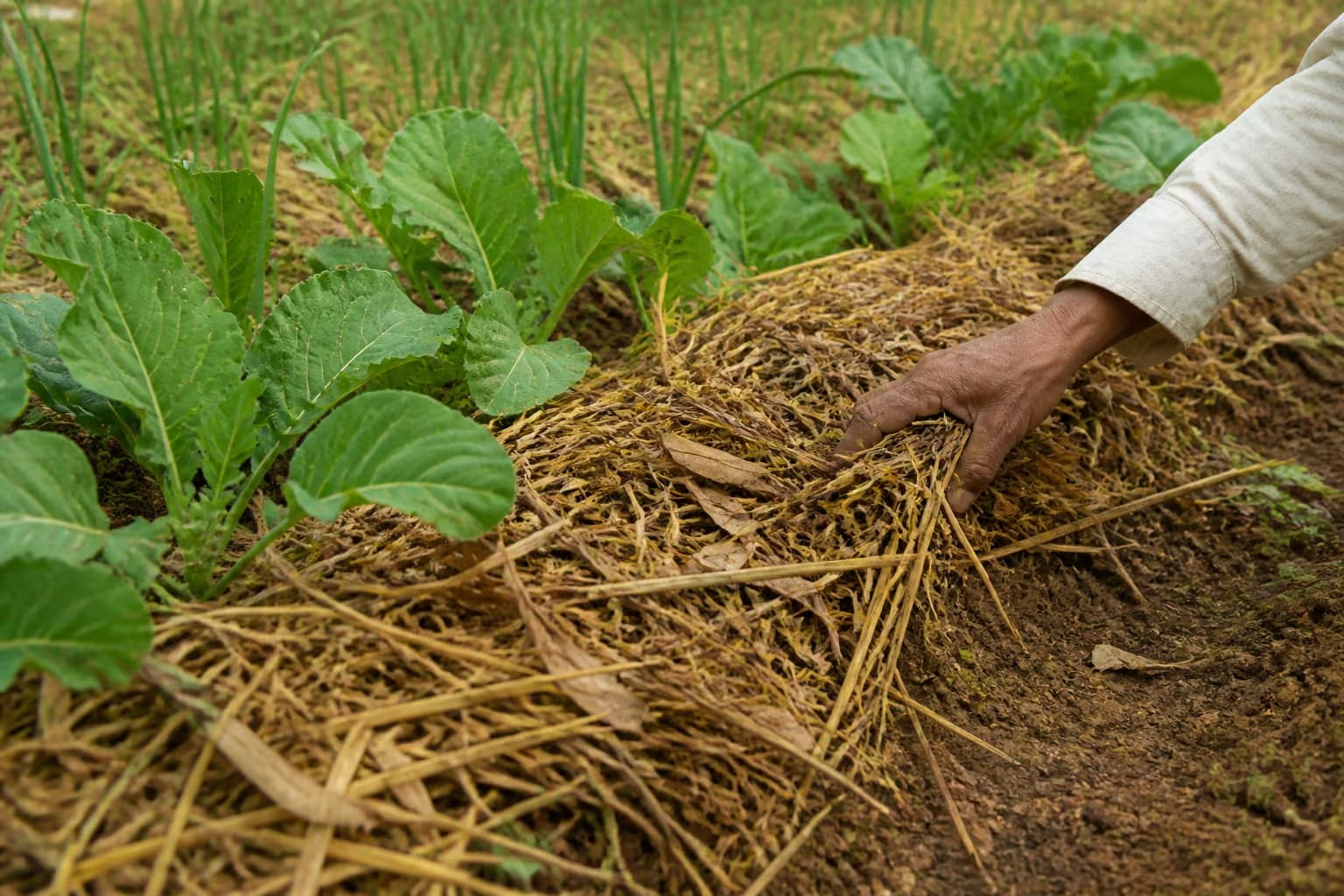
Mulch is a layer placed on top of the soil around plants. In vegetable beds, clean dry leaves, straw or suitable crop residues can reduce bare soil, slow evaporation and make some weeds easier to manage. The important word is layer: mulch belongs on the surface, not packed tightly against stems.
What mulch can do
The FAO conservation-agriculture overview identifies soil cover as one of its core principles. In a garden bed, surface cover can soften the impact of water, reduce rapid drying and protect soil from direct sun. As plant-based mulch breaks down, it also becomes part of the bed's organic-matter cycle.
Mulch is not a cure for every soil problem. It does not replace drainage, correct irrigation, a soil test or disease management.
Choose a suitable material
Common options include dry leaves, clean straw and healthy chopped crop residues. Use material that is free from plastic, persistent weed seeds and obvious disease. Fresh, wet grass placed in a thick mat can become slimy and airless, so let it dry or apply it sparingly.
Avoid assuming that any available waste is safe mulch. Painted wood, glossy paper, unknown industrial by-products and residues recently treated with unsuitable chemicals do not belong in a food-growing bed.
Apply it around established plants
- Water the bed if the soil is dry.
- Remove large established weeds.
- Spread a loose, even layer over exposed soil.
- Leave a small open ring around each stem.
- Check beneath the layer after watering and rain.
A very thick wet layer can hide pests, keep a poorly drained bed too wet or restrict air at the soil surface. A very thin scattered layer may disappear before it offers much protection. Adjust by observation rather than following one depth for every material and season.
Know when to pull it back
Move mulch aside temporarily when sowing very small seeds, inspecting a stem problem or helping a cold, wet bed dry. Replace or top it up only after checking the soil below.
In monsoon conditions, drainage remains the first priority. During hot, dry periods, mulch may stay useful for longer, but it still needs inspection.
A simple weekly check
Lift one small section and ask:
- Is the soil damp, dry or waterlogged?
- Are stems clean and uncovered?
- Is the material breaking down normally?
- Are weeds or pests increasing beneath it?
Mulching works best as a responsive practice. The surface layer should protect the soil while leaving the grower able to see and manage what is happening underneath.