Composting Kitchen and Garden Scraps: A Practical Start
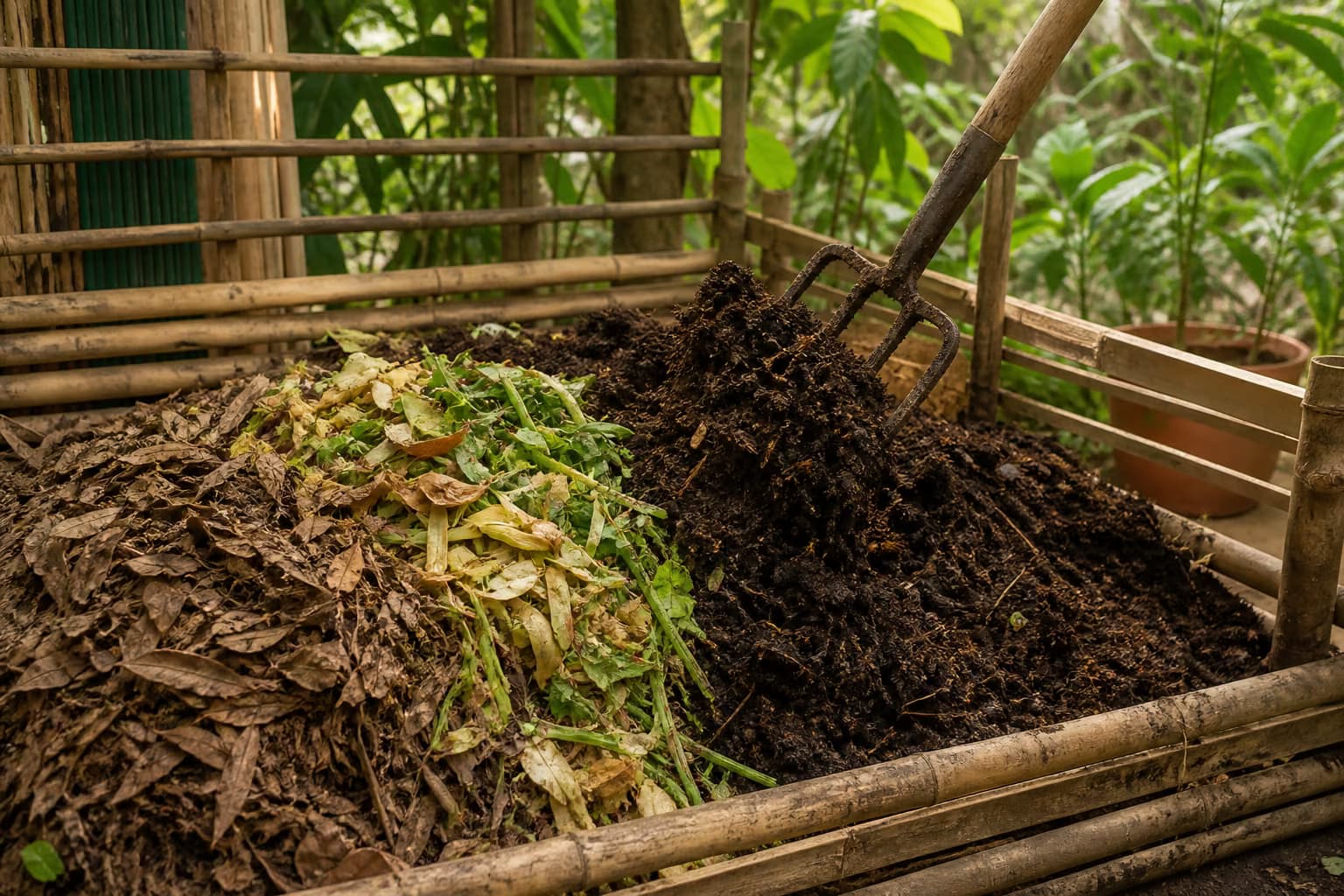
A practical compost pile needs four things: plant-based material, moisture, air and time. Balance fresh green scraps with dry leaves or other dry plant material, keep the pile damp rather than waterlogged, and turn it when it becomes compacted or develops an unpleasant smell.
What can go into a simple garden compost pile
Useful inputs include fruit and vegetable trimmings, dry leaves, soft garden residues and small amounts of untreated plant material. Chopping bulky pieces helps them break down more evenly. The FAO compost and mulch leaflet explains composting as the managed decomposition of organic material and notes that garden and kitchen plant waste can be recycled this way.
For a basic home or farm-garden pile, leave out plastic, glass, metal and chemically treated wood. Meat, fish, dairy, oil and pet waste require different controls and can create odour, pest or safety problems in an open pile. Diseased plants, mature weed seeds and recently sprayed residues also deserve a cautious local decision rather than automatic addition.
Build for air and moisture
Start with a loose base, then alternate handfuls or thin layers of fresh material and dry material. There is no need to chase a perfect visual ratio. Use the pile's condition as feedback.
- If it is slimy or smells sour, mix in dry leaves and add air.
- If it remains dry and unchanged, add a little water and fresh green material.
- If the centre is compacted, turn it gently.
- If rain is soaking the pile, cover the top while keeping the sides ventilated.
Know when compost is ready
Finished compost is usually dark, crumbly and earthy-smelling, with most original ingredients no longer recognisable. Time varies with material size, temperature, moisture and turning. A calendar date alone cannot prove maturity.
Do not place hot, actively decomposing compost against young roots. Let the material stabilise, then use it as a measured soil amendment or surface layer according to the needs of the bed.
Keep the process manageable
- Choose a shaded, well-drained location.
- Collect dry leaves before you need them.
- Add kitchen plant scraps in small amounts and cover them with dry material.
- Check moisture and smell each week.
- Turn only as needed to restore air.
- Use the compost only after it has cooled and matured.
Composting does not make every waste safe, and it does not replace a soil test. It is one practical way to return plant material to the soil while keeping the process visible and controlled.