From Field to Door: What Careful Produce Handling Looks Like
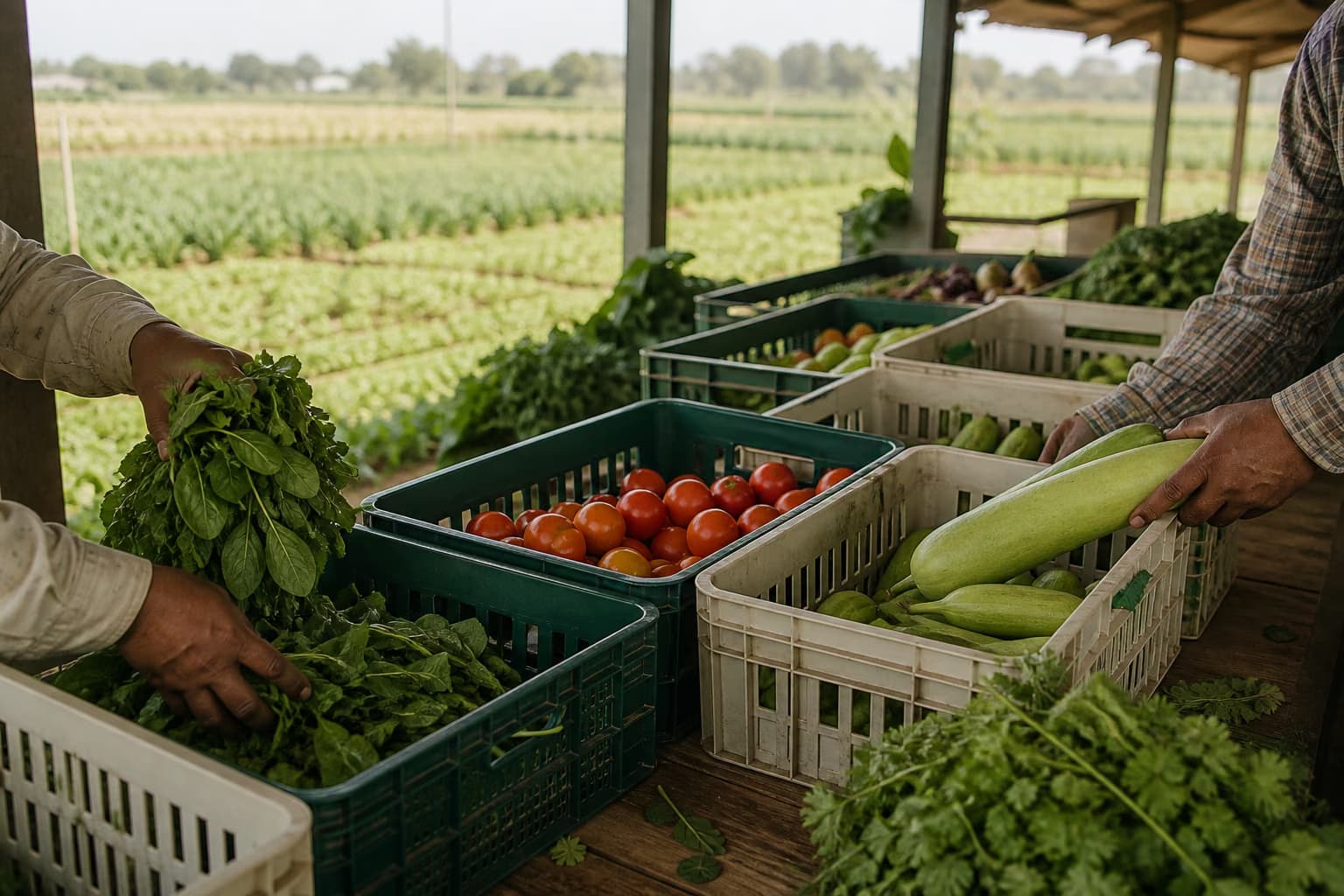
Careful produce handling is a chain of small controlled steps: harvest into clean containers, protect produce from heat and contamination, sort gently, store it under suitable conditions, and keep records that match the actual journey. A short route does not remove the need for food-safety controls.
Begin with clean harvest containers
Crates should be suitable for food, clean, intact and free from chemical or waste contamination. Avoid overfilling or throwing produce into a container. Leafy greens, ripe tomatoes and firm gourds tolerate pressure differently, so one packing method will not protect every item.
Move produce into shade
Heat can build while produce waits in direct sun or on a hot vehicle surface. A shaded, ventilated staging area gives the team time to inspect and sort without adding unnecessary heat. Shade is useful, but it is not the same as refrigeration and should never be described that way.
Sort for the next step
Separate decayed, badly damaged or contaminated items. Keep cleaned produce separate from untreated produce and clean equipment between the two when the process requires it. The FSSAI fruits and vegetables guidance covers sorting, potable-water cleaning and separation controls for food businesses.
Match storage and transport to the product
A suitable environment depends on the crop, packaging, journey time and applicable food-safety plan. Ventilation may help some whole produce, while cut or highly perishable items need stricter temperature control. Never infer a cold chain simply from an insulated bag or a quick delivery. Temperature control should be claimed only when the process and records support it.
Keep the public claim narrower than the evidence
Useful records can include harvest time, batch identity, handler checks, storage conditions and dispatch time. If a reading or event was not recorded, the public description should not imply that it was.
Careful wording matters:
- “Packed in a clean ventilated crate” describes an observed action.
- “Kept refrigerated” requires actual temperature-controlled storage evidence.
- “Delivered the same day” requires the recorded harvest and delivery timeline.
- “Safe” is not proved by appearance, speed or a photograph alone.
A practical handoff checklist
- Use clean suitable crates.
- Keep harvested produce shaded.
- Remove decayed or contaminated items.
- Separate cleaned and untreated produce when required.
- Use storage suited to the crop and journey.
- Record only events that actually occurred.
- Inspect the vehicle and handoff area before loading.
Field-to-door care is trustworthy when the physical handling and the words used to describe it are equally disciplined.